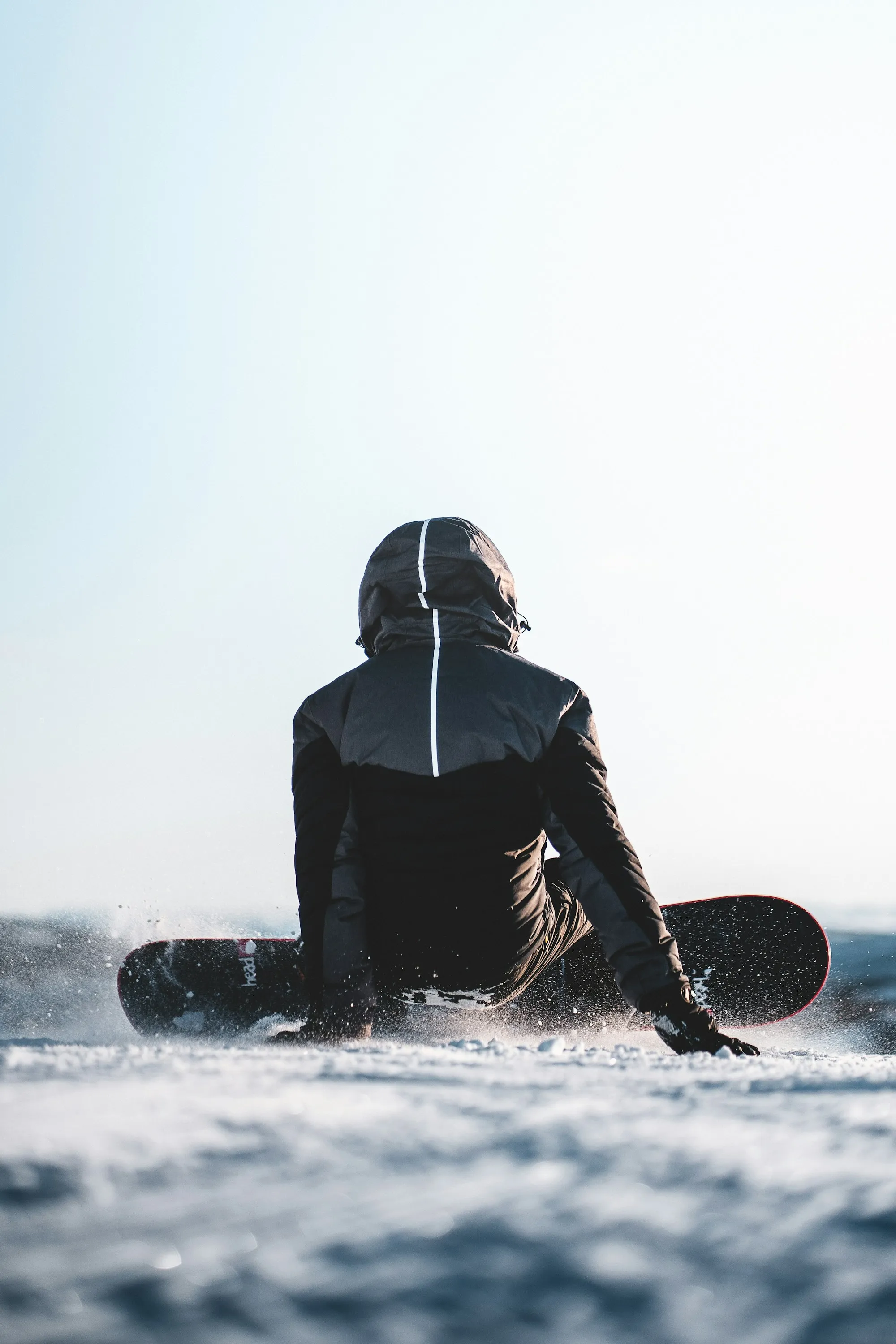
There is a well-worn saying in snowsports: snowboarding is harder to learn and easier to master, while skiing is easier to learn and harder to master. It is mostly true, and the part that matters for you is the first half. The opening days of snowboarding are humbling. You will fall a lot, your tailbone and wrists will know about it, and there will be a moment on day one when you wonder why anyone does this. Then, usually within a few days, something clicks, you link your first turns, and you understand exactly why people do this. This guide is about getting through the hard part with the least pain and the fastest progress.
What your first day feels like
Be honest with yourself about day one: it is tiring, repetitive, and full of falling. Both of your feet are strapped to a single board, sideways, which is a stance your body has no prior reference for, so the early hours are spent learning to stand up, slide a little, and stop without catching an edge and hitting the snow. You will spend a lot of time sitting in the snow, which is why waterproof pants are not optional. Progress on the first day is measured in small wins: standing up reliably, sliding in control, stopping on purpose.
The single most important first-day point is safety, specifically your wrists. The instinctive reaction to falling is to throw your hands out, and wrist injuries are the most common beginner snowboarding injury by a wide margin. Wrist guards matter from your very first run, not after you have had a scare. Add a helmet, and consider impact shorts with padded hips and tailbone, because the other thing you will land on repeatedly is your backside. None of this is overcautious; it is the difference between a sore first day and a first day that ends in the clinic.
Why a lesson is worth it (more than in skiing)
Take a lesson before anything else. Snowboarding’s learning curve is front-loaded, and the mistakes you make in the first two days are the ones you spend two seasons unlearning. An instructor stops them forming: they get you sliding and stopping safely in the first hour, teach the skill progression in the right order, and catch stance and edge errors before they set in.
Your friends will offer to teach you instead. Their hearts are in the right place and their teaching is not; they forgot the fundamentals years ago, and they will take you up terrain you have no business on yet. One or two lessons at the very start save you days of frustration and a few hard falls.
Rent or buy: what to do with gear your first season
The sensible approach is to rent most of your gear for the first season, then buy once you know you will stick with the sport and understand what you like to ride. Renting lets you try snowboarding without a significant upfront cost, and a rental shop will size a board and bindings correctly for you, which is one less thing to get wrong while you are learning. There is no reason to spend hundreds of dollars on a board before you know whether you will love it or which style of riding suits you.
The one exception worth considering is boots. Boot fit is intensely personal, rental boots are usually worn-out and poorly fitting, and nothing makes learning harder than boots that hurt or let your heel lift. If you can afford one piece of your own gear in the first season, make it boots. Comfortable, properly fitted boots improve your control and your comfort more than any other single thing, and they carry over directly when you do buy a board. The guide to the best snowboard boots covers how flex and fit work, and the Snowboard Gear section walks through the rest of the kit for when you are ready to buy.
Regular or goofy: which foot leads
Before you ride, you need to know which foot goes forward, because a snowboard is ridden sideways with one foot leading. Riding with your left foot forward is called regular; riding with your right foot forward is called goofy. Neither is better or more common in any way that matters, and goofy is not unusual; it is simply which feels natural to you. Getting this right from the start saves you fighting an awkward stance for days.
There are a few quick ways to find your natural stance. Imagine sliding across a slick floor in socks and notice which foot you lead with. Have a friend give you a gentle, unexpected push from behind and see which foot you step forward to catch yourself; that foot is usually your lead foot. Or think about which foot you would kick a ball with, as the kicking foot is often the back foot. None of these is perfect, so try both and go with what feels less awkward, but the push test is the most reliable starting point.
The first skills, in order
Snowboarding instruction follows a logical progression, and learning the skills in the right order is what makes the difference between steady progress and flailing. Each step builds on the one before it.
Skating and gliding
First you learn to move on flat ground with only your front foot strapped in, pushing with your back foot like a skateboard. This is how you get around lift lines and off the chairlift, and it teaches you to balance on the board before any real speed is involved. It feels clumsy and that is normal.
Strapping in, standing up, and sideslipping
Next, with both feet strapped in on a gentle slope, you learn to stand up (harder than it sounds the first few times) and to sideslip: facing across the hill, you use one edge of the board to slide straight down in control, feathering the edge to speed up and slow down. Sideslipping is the foundation of board control and your reliable way to descend anything before you can turn.
The falling leaf
From sideslipping you progress to the falling leaf, where you shift your weight to slide diagonally one way, then the other, drifting down the hill in a zig-zag on a single edge without committing to a full turn. It looks like a leaf fluttering down, hence the name. This builds the directional control and confidence you need before turning, and it is the point where many beginners start to feel in control for the first time.
The J-turn and linking turns
The J-turn is your first real turn: starting straight down the fall line and turning across the hill until you stop, tracing a J shape. Once you can J-turn confidently in both directions, you learn to link turns, connecting a turn on your toe edge to a turn on your heel edge in a continuous, flowing run. Linking turns is the milestone. It is the moment snowboarding stops being a series of controlled slides and becomes actual riding, and it usually arrives within the first three to five days. After that, the sport opens up fast.
Setting your expectations
Most people can link basic turns and ride green runs in control after roughly three to five days, though the first day or two are hard. Real comfort across most of the mountain takes a full season of regular days. The progression is not smooth: you will have a frustrating day, then a day where everything suddenly clicks. The riders who stick with it are the ones who expected the hard part and pushed through it, knowing the payoff comes quickly.
Frequently asked questions
Is snowboarding harder to learn than skiing?
Snowboarding is generally harder for the first few days and easier after that, which is the opposite of skiing. Beginners find skiing more intuitive at first because your legs move independently and you face forward, while snowboarding forces both feet onto one board sideways, which feels alien and leads to a lot of falling early on. But once snowboarders get past linked turns, usually within a few days, progression tends to be faster. The common saying is that snowboarding is harder to learn and easier to master; skiing is easier to learn and harder to master.
Should I rent or buy gear when learning to snowboard?
Rent for your first season, then buy once you know you will stick with it and understand what you like. Renting lets you try the sport without a large upfront cost, and rental shops set you up with the right size. The one thing worth buying early is your own boots, because fit is so personal and rentals fit poorly; comfortable boots make learning far easier. Once you are committed and know your riding style, buy a board, bindings, and boots suited to you.
What should a beginner snowboarder wear and bring on the first day?
Wear a waterproof jacket and pants (you will be sitting in snow constantly), warm gloves or mittens, a moisture-wicking base layer, and warm socks. Bring or wear a helmet, goggles, and, importantly, wrist guards, since wrist injuries are the most common beginner snowboarding injury. Impact shorts with padded hips and tailbone also save a lot of pain on day one. Avoid cotton, which stays wet and cold. Sunscreen and a small snack help too, because the first day is more tiring than people expect.
The short version
Snowboarding is hard for a few days and rewarding very quickly after that. Protect your wrists from your first run, take a lesson before bad habits set in, rent your gear for the first season except possibly your own boots, find whether you ride regular or goofy, and work through the skills in order: skating, sideslipping, the falling leaf, the J-turn, and finally linked turns. Expect to be riding green runs in control within three to five days. When you are ready to build your own setup, start with the best snowboard boots and the rest of the Snowboard Gear section.
This guide is general instruction, not a substitute for a qualified snowboard instructor or for following the safety guidance at your local mountain. If you find an error in this guide, please email [email protected].