The mirror only tells you half the story. A snowboard jacket can look great standing up, then pull across your shoulders the moment you reach for a binding. Pants can sit neatly at the waist and still feel tight when you crouch.
Try your outfit with the layers and boots you’ll ride in. You should be able to reach your feet, bend your knees, and lift your arms without losing coverage at the waist or wrists. A few minutes moving around at home will tell you more than the fit label.
Start with measurements, then check movement
Use the size chart for the exact garment. Your jeans size isn’t a reliable substitute, and a medium from one brand may fit differently from another. Follow the chart’s instructions for measuring your chest, waist, hips, and inseam where required. Some charts show body measurements; others show garment dimensions.
If you fall between sizes, look at where you need the extra room. A different cut may give you space through the hips without adding unwanted length to the legs. Going up a size changes more than the one area that feels tight.
Take measurements you can use
Use a flexible tape and the measuring points shown on the garment’s size chart. Keep the tape level around your body and avoid pulling it tight enough to compress your clothing. A second person can help you keep it straight across your back.
Write down the measurements rather than remembering a size letter. For a body-measurement chart, use your body measurements as instructed. For a garment-measurement chart, compare with a similar piece laid flat using the same measuring method. A flat chest width and a full chest circumference are different numbers; mixing them up can send you several sizes off.
Check what “waist” means on that chart. Your body’s measuring point may be above where you wear your jeans. For inseam, follow the stated start and finish points rather than assuming your everyday pants length transfers directly to snow pants. Their cuff needs to work around a much larger boot.
How should the jacket fit?
Zip it over your normal riding layers, then reach forward as though you’re fastening a binding. Notice any tension across your upper back. Lift both arms and check whether the cuffs retreat far up your wrists or the hem pulls above your waistband.
Sit down next. The jacket should still overlap your pants, without an uncomfortable fold of fabric or zipper pressing into you. If you prefer a long jacket, this is where to check whether that length works as well seated as it does standing.
Finish with your gloves and helmet. Adjust the cuffs the way you’ll wear them. If the hood is going over your helmet, turn your head with both on. Check that you can still see comfortably and reach the pockets and vents you expect to use.
How long should snowboard pants be?
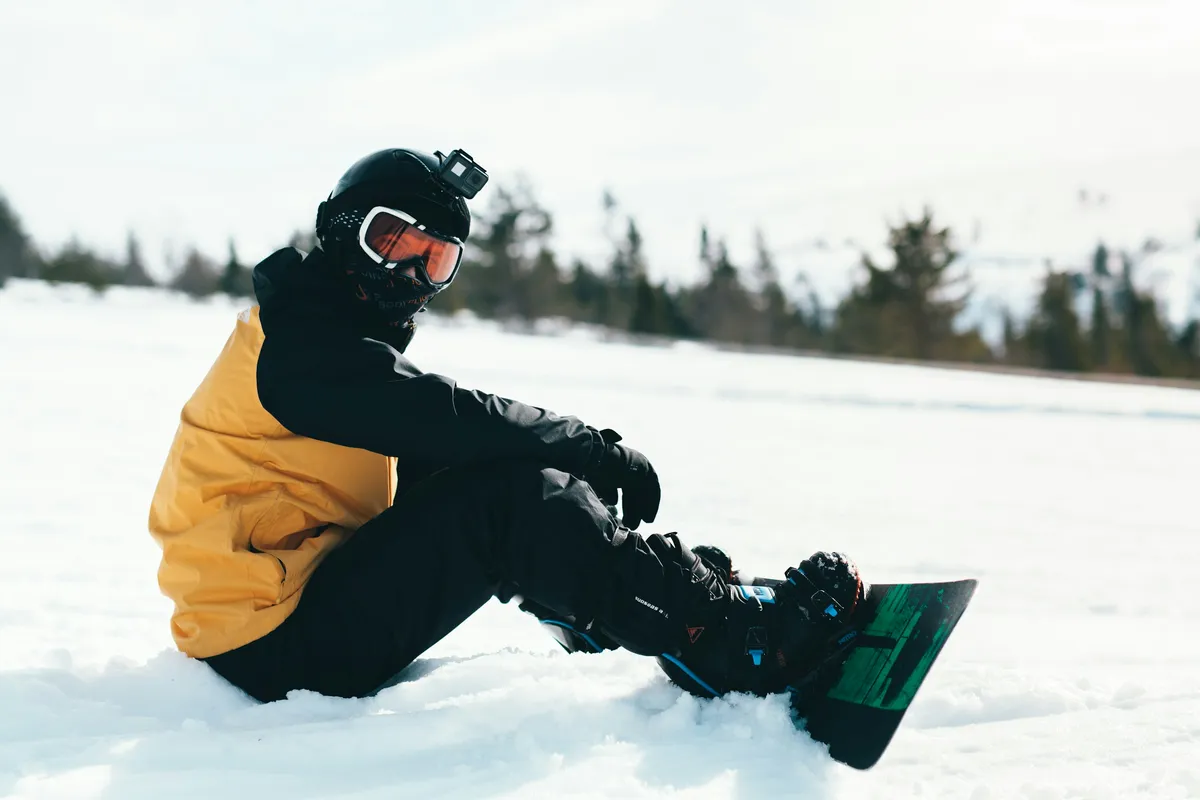
Check them with snowboard boots on. The outer cuffs need enough room to sit over the boots, while the gaiters should sit as the garment is designed to be worn. The hems shouldn’t be trapped under your heels as you walk.
Fasten the waist and bend into your riding stance. Then sit and reach toward each boot. Watch for pulling across the seat, thighs, or knees. The waistband should stay secure without having to cinch it so tightly that sitting becomes uncomfortable.
Put your usual small items in the pockets and repeat the movement. A phone that sits comfortably when you’re upright may press into your thigh when you crouch.
Six movements worth trying before you keep it
| Movement | Check the jacket | Check the pants or bib |
|---|---|---|
| Stand with everything fastened | Room over your layers | Secure waist or comfortably adjusted straps |
| Reach forward | No restrictive pulling across the shoulders | Waist stays in position |
| Raise both arms | Wrists and waist still covered | Straps don’t dig in |
| Squat | Hem and zipper don’t press uncomfortably | Room through the seat, thighs, and knees |
| Sit and reach for each boot | Jacket still overlaps the lower garment | No pulling through the torso or crotch |
| Walk in your boots | Pockets and vents are accessible | Hems stay clear of the soles |
Keep the tags attached and follow the return conditions while trying things on. If something feels wrong, identify where: “tight across the shoulders when reaching” gives you a better starting point than simply deciding the whole jacket is too small.
Change the size or change the cut?
Use the movement checks to identify the problem before ordering another size. Loosen adjustable cuffs, waist tabs, and bib straps first so an over-tight adjustment doesn’t masquerade as a sizing problem.
| What happens | What to try next |
|---|---|
| The jacket pulls across your chest and shoulders, with little room elsewhere | Try the next size with the same layers, then repeat the reach test |
| Your shoulders feel restricted but the waist and sleeves are already loose | Try a different cut with more upper-body room |
| Pants fit your waist but bind at the seat or thighs | Try a roomier seat and thigh cut; compare the next size only if the waist can still stay secure |
| Pants fit through the hips and knees but drag under your heels | Look for a shorter inseam rather than tightening the waist to lift them |
| Sleeves cover your hands but shortening the cuff adjustment bunches excess fabric | Compare a shorter sleeve or different cut |
| Bibs pull at the crotch when you sit, even with comfortably loosened straps | Look for more torso length rather than assuming longer legs will solve it |
Fit is also about what stays in place. A waist that only holds when painfully tightened, or a hood that pulls the collar upward every time you turn, isn’t working just because you can fasten it. Keep the better-fitting piece in contention even if its size label differs from the rest of your clothes.
How baggy is too baggy?
Loose clothing can give you the look and movement you want. The important distinction is between a roomy cut that fits and a garment that’s oversized everywhere.
Sizing up may also lengthen the sleeves, lower the crotch, or add fabric around your boots. If those changes get in the way, try a relaxed or baggy cut in your usual measured size instead. Fit labels vary between brands, so use the chart and the movement checks together.
Bibs need one extra check
Adjust the straps before judging the leg length, then sit and reach toward your boots again. A bib has to fit from shoulder to crotch as well as through the legs. If it pulls through your torso, loosening the waist won’t solve it.
Try its bathroom-access zipper with your layers on too. The pants-versus-bibs guide covers the tradeoffs if you’re still deciding between them.
Once the fit works, compare the warmth and weather protection you need in the jacket, pants, or bib collections. You can narrow the price afterward, including pants from $200 to $299 and bibs under $300. A tempting price is only useful if you can comfortably ride in what you’ve bought.